This article explores the narratives and significance of Indigenous languages, focusing on their impact during World War I and II through the code talkers. It highlights the importance of Indigenous language revitalization, weaving in cultural identity, and the challenges faced by these communities.

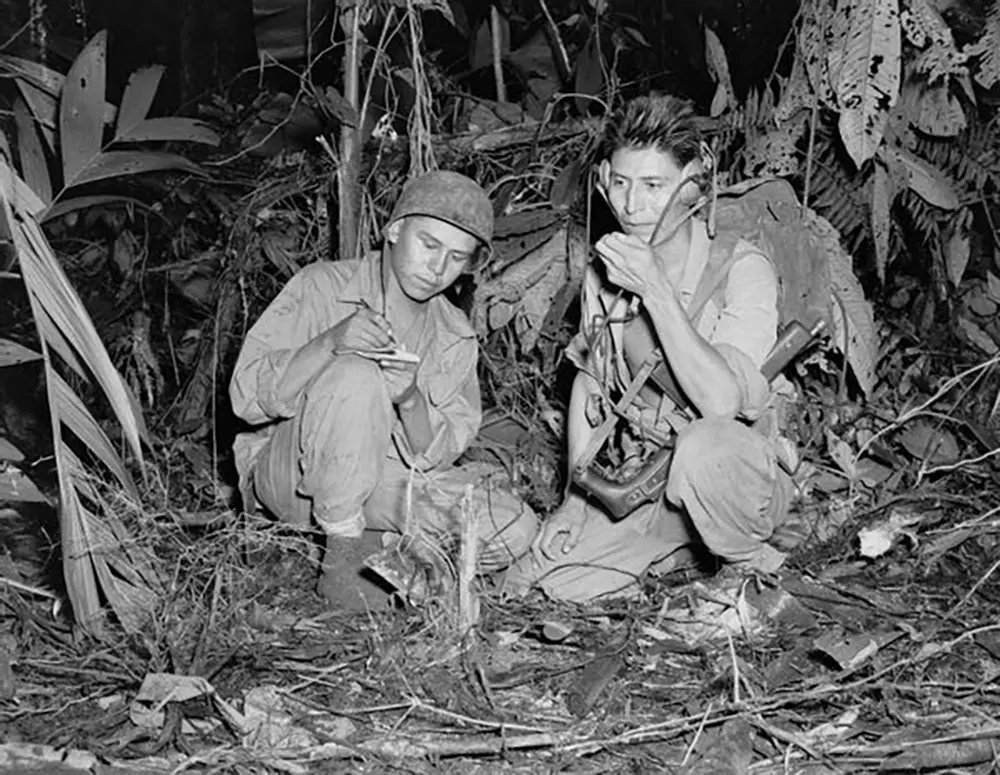
One of the most poignant examples of the power and significance of Indigenous languages comes from the valiant efforts of the code talkers during World Wars I and II. These servicemen hailed from multiple Native American tribes, including the Diné (Navajo), Comanche, Meskwaki, Chippewa (Ojibwe), Oneida, and Hopi. They utilized their Indigenous languages to craft unbreakable codes, which were indispensable in assisting the U.S. in its most crucial military campaigns. The impact of their contribution can’t be understated. As William McCabe, a Diné (Navajo) Marine Corps code talker, shared:
What’s so striking about this is the innovative use of age-old Indigenous languages in shaping modern history. While enemies eavesdropped, trying desperately to decipher messages, they heard ancestral languages used in contemporary and groundbreaking ways.
Efforts to promote language revival are thriving across the country. For instance, the Chickasaw and Ojibwe communities have collaborated with Rosetta Stone on revitalization projects. The Tebughna Foundation’s Dena’ina qena Project is another noteworthy initiative committed to immersion and rejuvenation. This program focuses on teaching students the Upper Inlet Dena’ina language and culture. By doing so, they ensure that narratives aren’t just taught and lived.
However, challenges persist. Indigenous narratives often passed down orally, are at risk. With the heart-wrenching reality of language loss comes an accompanying loss of these invaluable oral histories. The urgency to collect, document, and weave these stories into modern education has never been more paramount.
Languages 4™ is ideal for this situation. It’s not merely about teaching a language. It’s about rekindling a connection to history, values, and identity. As the world turns digital, the Languages 4™ platform enhances language learning by intertwining it with the stories that breathe life into it. The growing crisis of identity accompanying language loss underscores the platform’s significance. We’re reviving a sense of belonging, history, and pride by rejuvenating languages.
Language is a living entity deeply rooted in the stories, lands, and experiences of its people. As these narratives shape and define Indigenous communities, their integration into the language revival process is essential. Through this, we ensure that future generations will speak their ancestors’ language and carry forth the stories that have defined their past and will continue to shape their future.
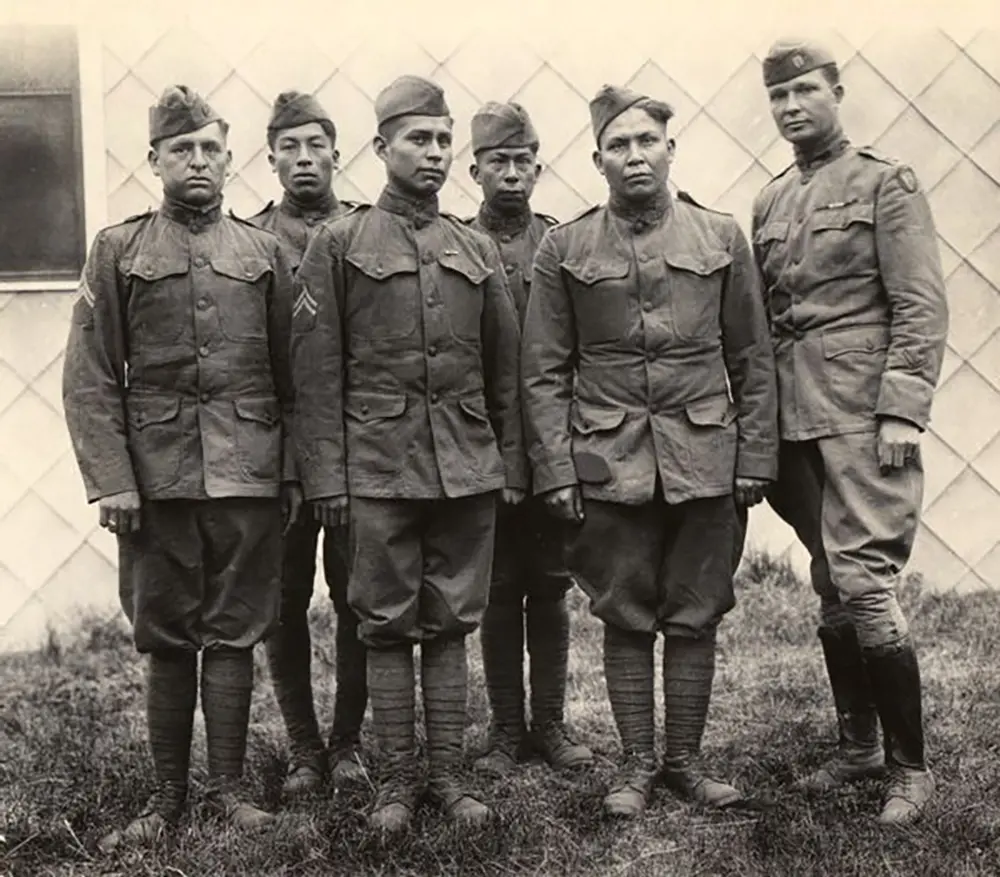
In addition to Choctaw language speakers, Ho-Chunks, Eastern Cherokees, Comanches, Cheyennes, Yankton Sioux, and Osages were among the Native men who served as code talkers during World War I. - attribution: https://s.si.edu/3KAGNC4
Information about the photos
Choctaw telephone squad, returned from fighting in World War I. Camp Merritt, New Jersey, June 7, 1919. From left: Corporal Solomon Bond Louis, Private Mitchell Bobb, Corporal James Edwards, Corporal Calvin Wilson, Private Joseph (James) Davenport, Captain Elijah W. Horner. — Mathers Museum of World Cultures, Indiana University — Navajo code talkers Corporal Henry Bahe Jr. and Private First Class George H. Kirk. Bougainville, South Pacific, December 1943. —National Archives photo no. 127-MN-69889-B—
Image Gallery
Tagged:
By Tim O'Hagan
Related Articles
Languages 4 Core Value - Language Sovereignty | The First Pillar of Languages 4
Discover the essence of language sovereignty in Indigenous communities. Languages 4™ champions their rights, emphasizing collaboration and respect in revitalization. Dive into our mission and learn...

The Scaffolded Immersion Pedagogy
The Scaffolded Immersion Pedagogy, The Fundamental Methodology Behind SMASH Education, Languages 4's Platform Partner
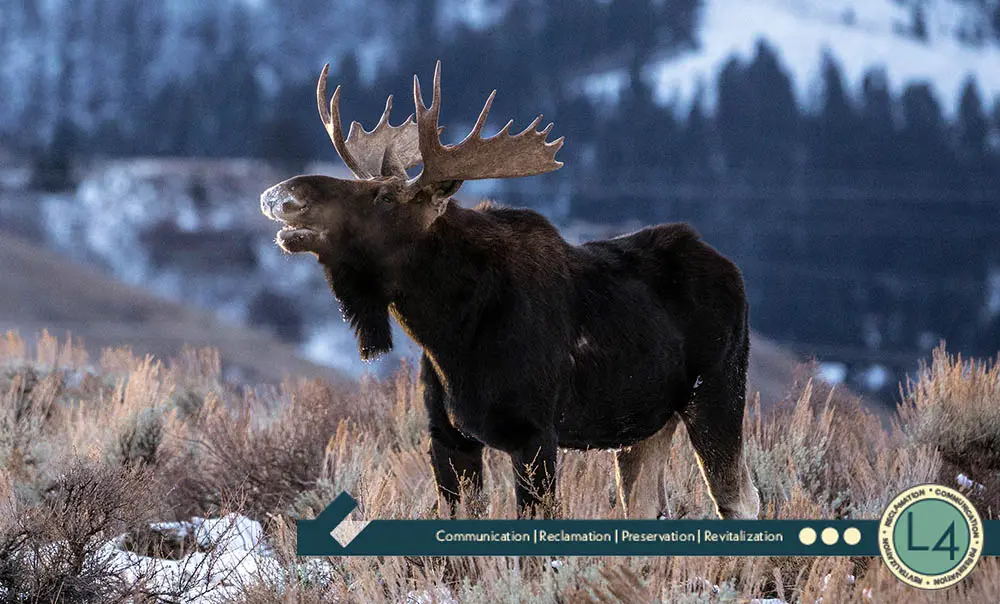
From 'Moosh' to 'Moose': The Algonquian Legacy in North American English Lexicon
This article explores the origins of the word 'moose,' tracing it back to the Algonquian language of the Innu people, and discusses the broader influence of Indigenous languages on North American English.